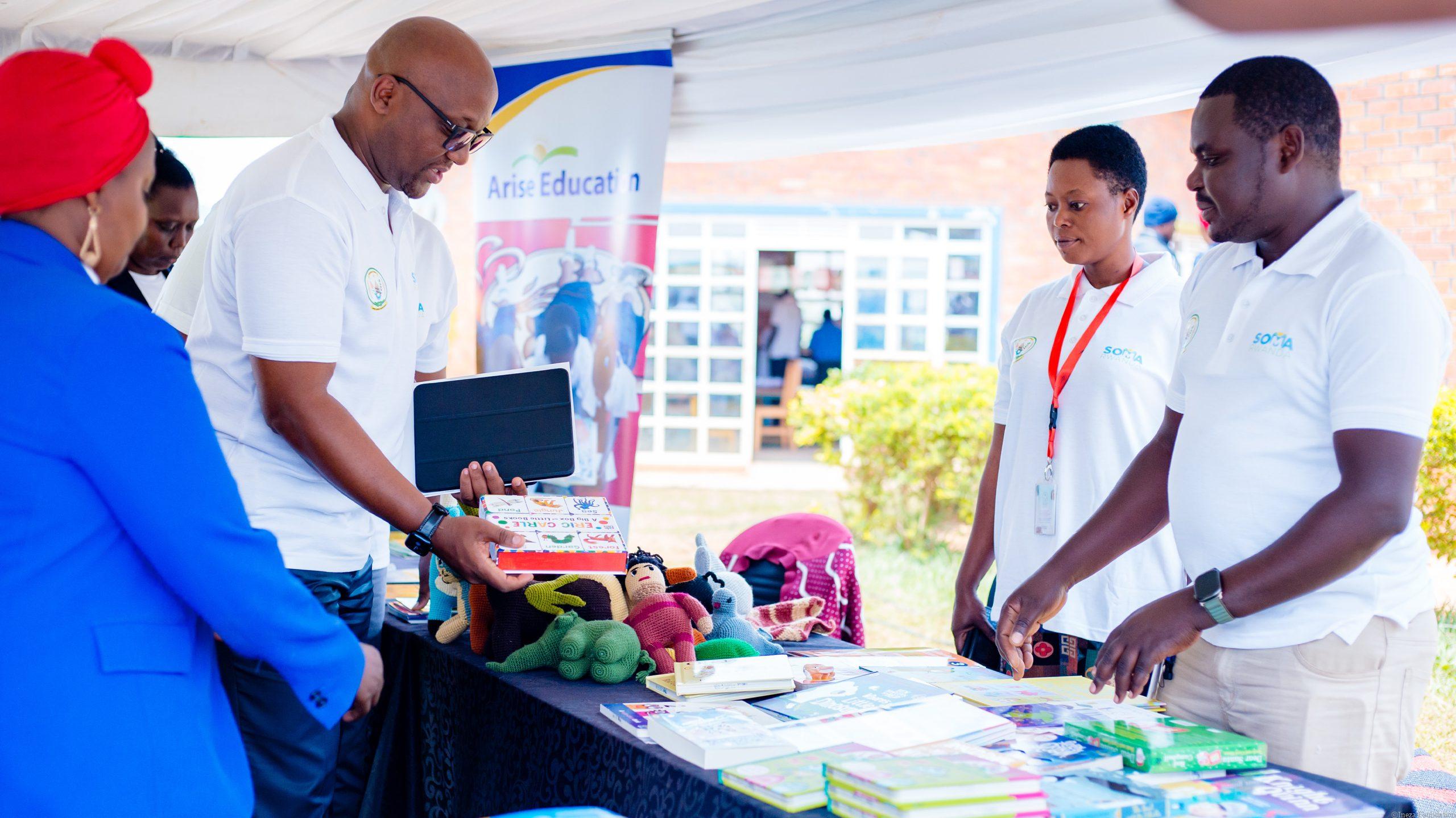

Gasabo District – September 19, 2025 – Rwanda joined the global community in celebrating International Literacy Day and National Literacy Month with a colorful event held in Bumbogo Sector, Gasabo District.
The celebration, guided by the theme “Promoting Literacy in the Digital Era,” brought together government officials, education partners, students, and community members to reflect on the role of literacy in shaping the nation’s future.
Literacy is widely recognized as a fundamental human right and the foundation for lifelong learning and social transformation. For Rwanda, it is also a pathway to achieving Vision 2050, which aims to build a knowledge-based and middle-income country.

The Ministry of Education, through the Rwanda Basic Education Board (REB), continues to prioritize literacy as outlined in the Education Sector Strategic Plan and the recently approved Foundational Learning Strategy.
Nelson Mbarushimana, Director General of REB, emphasized the importance of strengthening literacy in the digital age.
“To effectively use ICT, strong skills in reading and writing are essential. We encourage parents, teachers, and students to nurture a culture of reading. Parents should provide children with books that not only support learning but also instill Rwandan values such as patriotism, unity, and discipline,” he said.
He further noted that literacy development starts from early childhood and requires combined effort from schools, families, and communities.

Civil society organizations also played a central role in the celebration.
Janvier Niyonsaba, Program Coordinator of Ineza Foundation, highlighted the organization’s contribution.
“At Ineza Foundation, we promote a culture of reading starting with young children. We work with Early Childhood Development Centers (ECDs) and provide books free of charge to schools and community libraries. Today, we are handing over books to the host school as part of our commitment to strengthening literacy nationwide,” he said.
 Janvier Niyonsaba, Program Coordinator of Ineza Foundation, handing over books to the host school during the Literacy Month celebration.
Students themselves testified to the value of reading and writing in their academic and personal growth.
“Reading and writing have boosted our competitiveness in class and improved learning in subjects such as ICT. However, we still need more books in different subjects beyond those provided by MINEDUC.” Said Thimothee Ndayizeye, a student at École Secondaire Bumbogo.
From G.S. St. Michel Catholique Charles Lwanga, a student Shalom Mujyambere stressed the importance of the celebration.
“International Literacy Day is very important for us as students. Books give us knowledge, education, and practical skills. We are grateful to the government for recognizing and celebrating this day.” Mujyambere.
Similarly, Senior Three student Ange Umuhire underlined the practical value of literacy.
“Reading and writing are powerful tools for knowledge. When you can read, you cannot lose direction—you can read maps and find your way. While we already have some books, we would benefit even more if access to diverse materials was expanded,” she said.
 Ange Umuhire, a Senior Three student, highlighting how reading and writing support learning and daily life.
Through the Soma Rwanda platform, launched in 2012, the Ministry of Education and its partners continue to coordinate efforts to promote literacy culture across the country.
This year’s celebration served not only as a reminder of literacy’s importance but also as a call to action for communities, families, and institutions to embrace reading and writing as tools for empowerment in the digital era.
As Rwanda expands National Literacy Month from a single day to a month-long celebration, the focus remains on building a society where literacy skills empower every citizen to thrive, innovate, and contribute to a brighter, knowledge-driven future.
Ineza Foundation is recognized for its ongoing commitment to promoting literacy by educating communities and providing free access to reading and writing materials across various districts of Rwanda.
Through its support to schools, libraries, and community programs, the organization continues to play a vital role in strengthening a culture of reading and empowering learners of all ages to build brighter futures.


